Casa Lumen: the funeral home, reimagined as a sanctuary for grief.
A hypothetical funeral home. We started from a single uncomfortable observation: in our society, we no longer know how to grieve. Wakes are short, faces composed, the body whisked away with efficiency. The room is cold, fluorescent, optimised for turnover. We were asked: what if the funeral home was the one place where grief was allowed to be loud, slow, embodied — and held?
We have lost the buildings, the rites and the time to grieve. The body remembers.
In our society we are not taught to sit with loss. The mass no longer holds the function it once did — we lack a sacred building that invites us to transcend pain and connect to the part of us that gives strength. Funeral homes have become the opposite: cold, efficient, fast. You walk in, you compose your face, you walk out. The grief stays in the body for years, undischarged, looking for an exit. Casa Lumen proposes something different: a place where, for two or three days, grief is given a room of its own.
Rituals to give grief a body, a sound, a goodbye.
Singing the loss out of the body
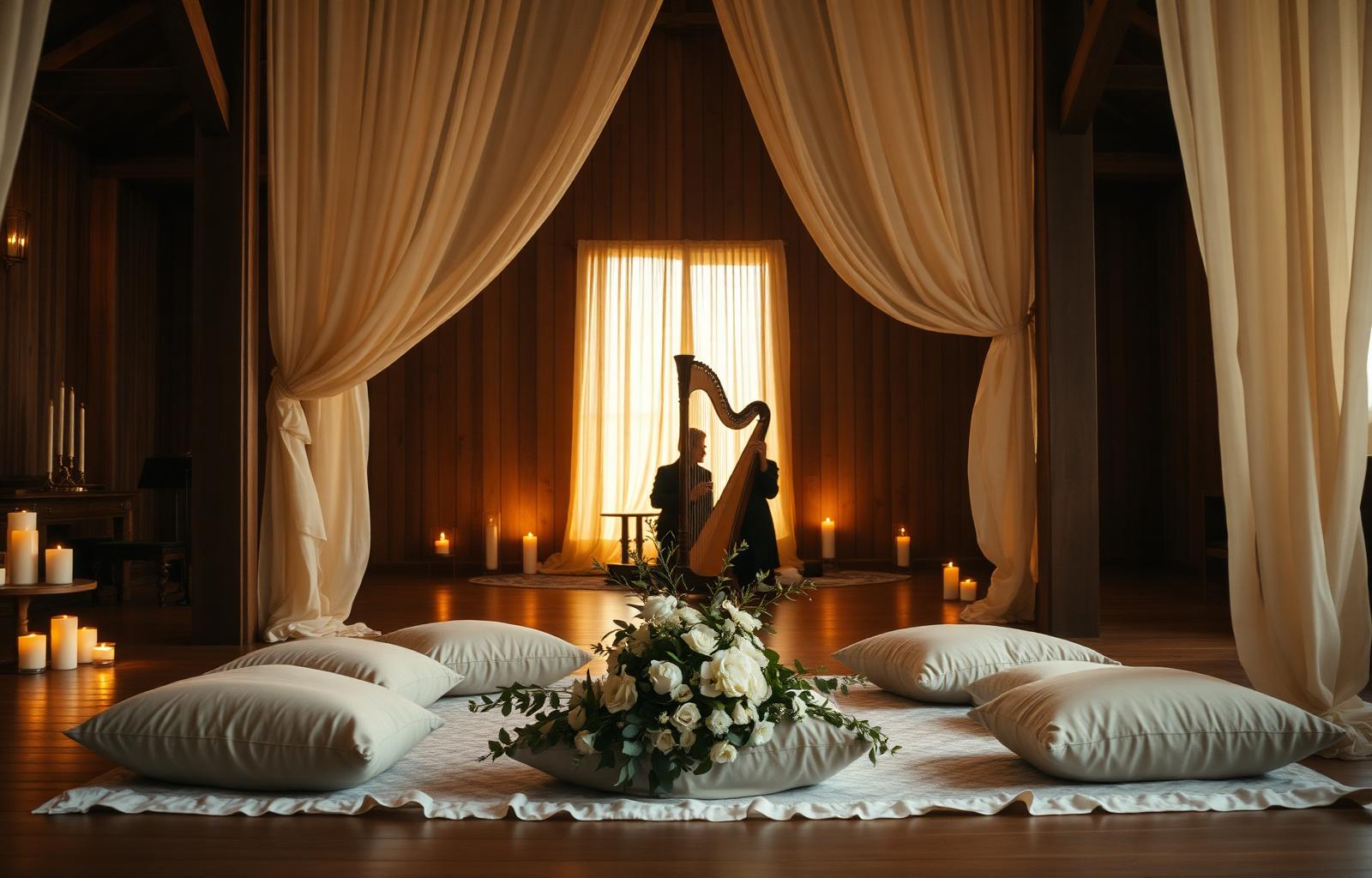
Each evening, a musician with a harp and another with an acoustic guitar gather the family in a circle of cushions on a wooden floor. No words. Only sound. Mantras that everyone can hum even if they have never sung. The grief travels from the chest to the throat to the room — and leaves the body with the music.
Recreating the state we should be in
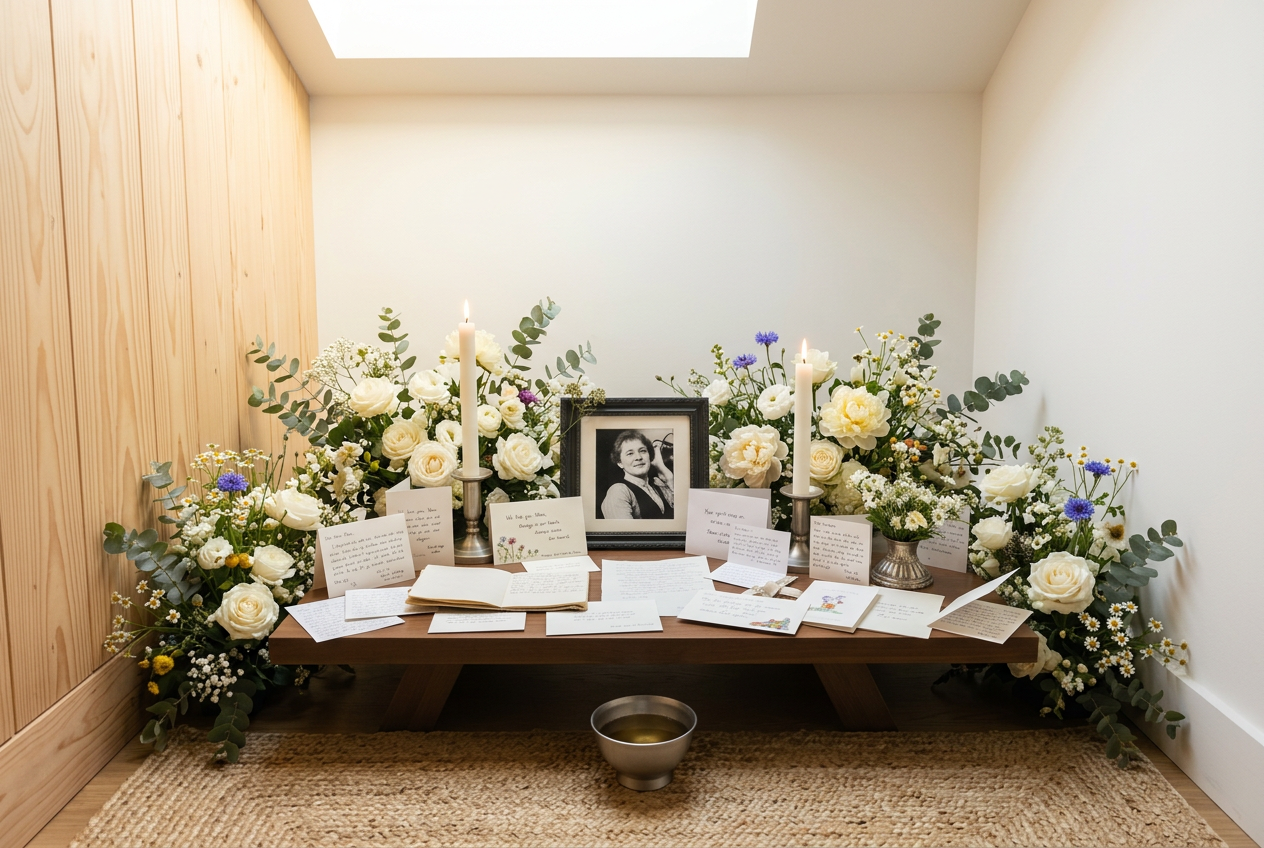
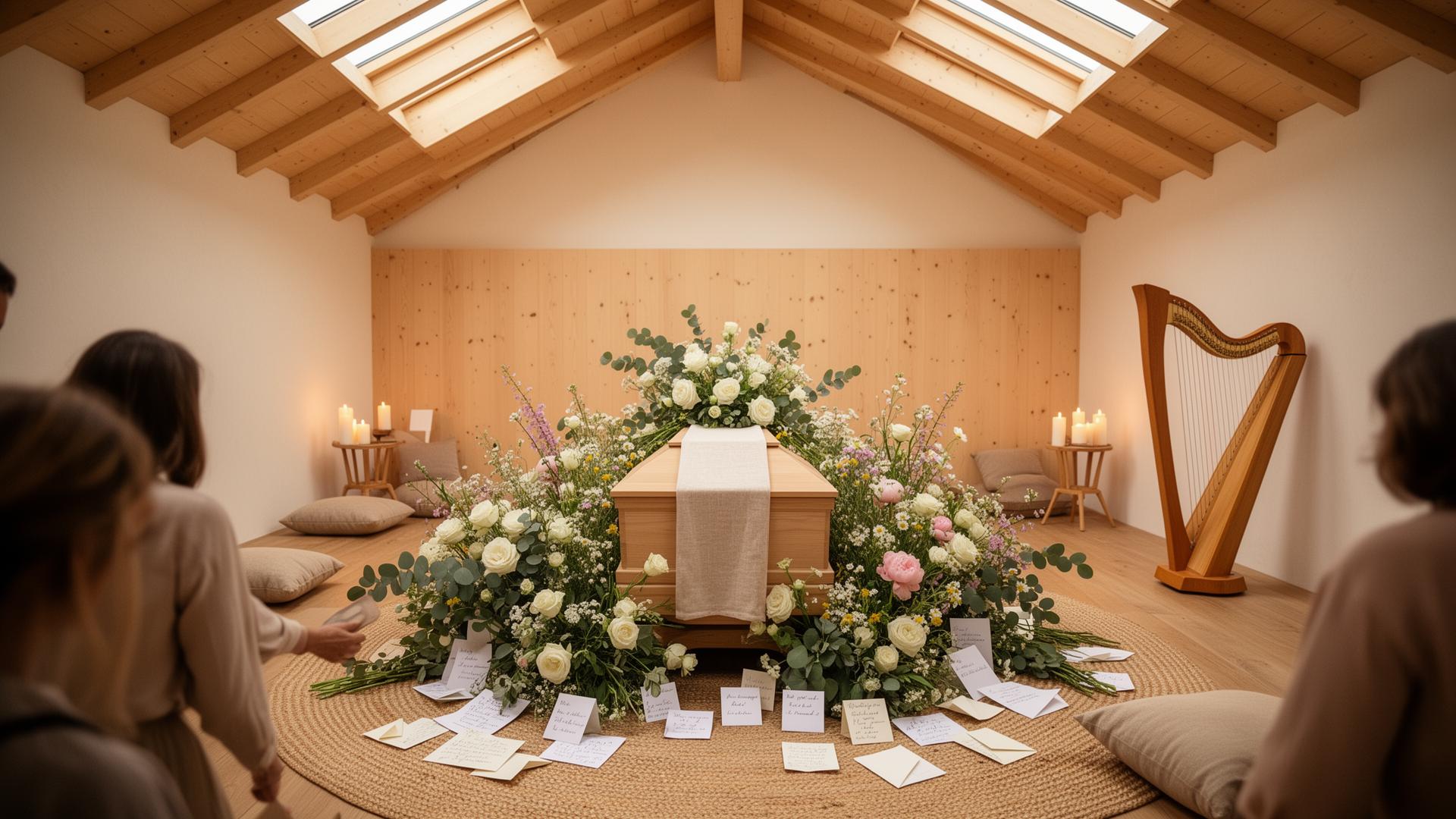
We design ceremonies to return mourners to the emotional state grief asks for — and that polite society denies them. Lighting candles for what was unsaid. Reading letters out loud. Washing hands in a bowl of water. Walking a slow lap around the body, in silence. The body wants to do something. We give it the choreography.
A life, told before the goodbye
On the second day, the family is invited to bring three objects of the person who left — a watch, a recipe, a song. We build a small altar around them. Each family member tells the story behind one object. Strangers cry. Strangers laugh. The person becomes whole again, just before they go.
Touch, breath, weight
A bodyworker is on call all three days. Not for therapy — for presence. A hand on the back during the worst hour of the night. A cup of warm tea pressed into trembling fingers. A weighted blanket on the shoulders. Grief lives in the body. The body needs witnesses.

Why do we hide death? We propose bringing it back into the room.
Our culture has tucked death away — behind closed doors, behind professionals, behind a quick efficient process that asks the family to look the other way. We propose the opposite. Casa Lumen offers ritual guides for families who want to design their own farewell. For many, the idea of the church no longer resonates — but the need for someone to hold the thread of the ceremony still does. We provide a master of ceremonies: not a priest, not a notary, but a trained facilitator who walks the family through the structure of the goodbye, holds the silences, names what is happening in the room, and gives permission to feel.
Designed structures, not improvisation
We hand the family a guide of rituals to choose from — washing the body, lighting candles, reading letters, walking around the coffin. They pick what speaks to them. The structure does the heavy lifting so the family can stay in their feelings.
Someone to hold the thread
A trained facilitator who is not a priest. They open the ceremony, name each step, hold the pauses, invite each gesture. The family does not have to think about what comes next — they can simply be inside it.
Mind quiet, spirit open, peace returned
A structured event where mourners can put their thinking minds aside and connect with the spiritual part of themselves — to let go, to feel compassion, to accept what cannot be changed, and to find peace again. That is the whole point of a goodbye, and we have stopped offering it. We are bringing it back.
Wood, candlelight, linen, silence.
We strip the fluorescent lights. We strip the plastic flowers, the synthetic upholstery, the sliding glass doors that announce a transaction. We replace them with raw stone walls, wooden beams, skylights that bring real daylight, long linen curtains that move in the air, low cushions on warm wooden floors, and the sound of running water in the corner. The room itself does half the work.
Skylights, candles, warm lamps. Never overhead fluorescents. Light that flatters tears.
Running water at one corner. Live harp at certain hours. Long stretches of curated silence.
Cedar, beeswax, fresh flowers. The chemical smell of disinfectant gone — replaced by neutral and warm.
Linen, oak, raw stone, wool cushions. Nothing plastic. Nothing that tells the body 'institution'.
Three gestures we would build into every farewell.
Met at the door, not at a desk
When the family arrives, no clipboard, no forms. A host meets them at the door, takes their coats, walks them in slowly. The administrative work happens later, in a quiet room, with tea already poured. The first gesture is not a signature — it is a hand on a shoulder.
A space that stays open through the night
The sanctuary is not closed at 9pm. A small lamp stays on. Anyone who cannot sleep can return to sit with the body, with the music, with another mourner. Grief does not respect office hours. The building shouldn't either.
A letter, six weeks later
Six weeks after the funeral — when the world has stopped asking and the silence becomes loudest — a handwritten letter arrives from the team. No survey. No invoice. Just: 'We are still thinking of them. And of you.' Signed by name.
Four ingredients of a moment, applied to a farewell.
The mantra at sunset. The candle for what was unsaid. Small rituals that lift grief from suppression to release.
We ask one question — what music did they love — and the entire farewell is shaped around the answer. The person comes back into the room.
The team know the name of the person who died. They speak it. The family hears their loved one honoured by strangers, and it changes them.
The letter at six weeks. The flower on the anniversary. The grief circle every month. The relationship does not end at the burial — it continues, gently.
This is a hypothetical project — and we believe society is asking for it.
Casa Lumen does not exist yet. The rituals, the architecture, the rhythm of two or three days — all are designed and ready to be tested with a funeral partner who feels what we feel: that the way we say goodbye is broken, and that a building, a sound and a few hours of slowness could begin to heal it. If you run a funeral home and this resonates, we would love to walk your space with you.